Choosing the Right Cage for Your Companion Bird: A Toronto Adopter's Guide
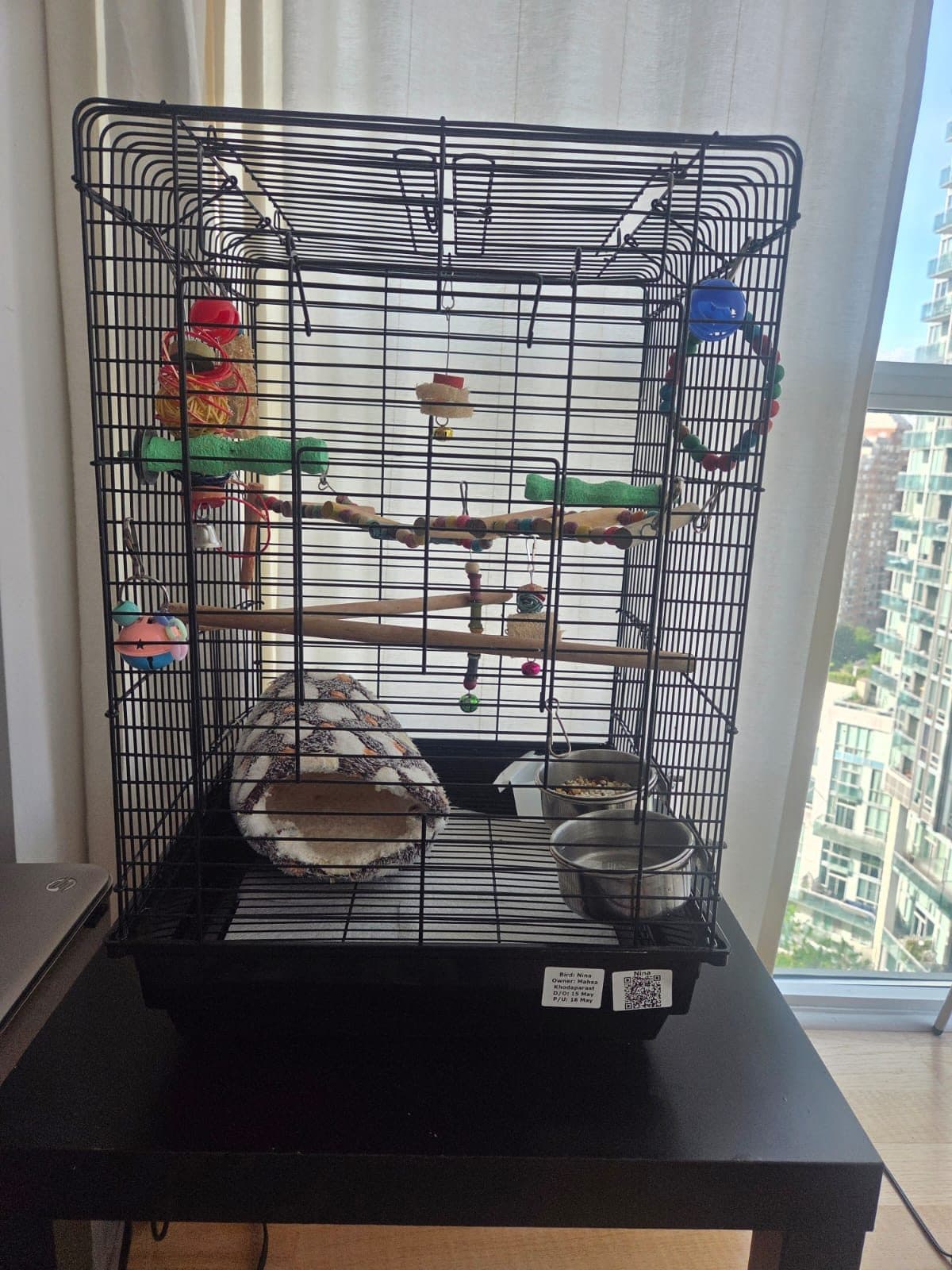
Bringing a companion bird into your home is an incredibly rewarding experience. One of the most fundamental decisions you’ll make for their well-being, even before they arrive, is selecting the perfect cage. Think of it not just as a container, but as your bird's primary home, their safe haven, and their personal space. Getting this right is crucial for their physical health, mental stimulation, and overall happiness. For Toronto and GTA bird parents, understanding what makes a good cage, where to find one, and how to set it up can be the foundation of a fantastic partnership with your feathered friend.
Size Matters: Go Big or Go Home (Literally)
When it comes to bird cages, bigger is almost always better. This is the single most important factor. Your bird needs ample space to stretch their wings fully without touching the cage bars, to climb, to play, and to have distinct areas for eating, sleeping, and eliminating waste. A cramped cage can lead to stress, feather destructive behaviours, and even physical deformities over time.
Consider the species you are adopting. A budgie will need a different size cage than an African Grey. Always research the specific requirements for the species you are interested in. As a general guide, you'll want a cage that's significantly wider than it is tall, allowing for natural horizontal movement. For small birds like budgies or finches, aim for at least 18" L x 18" W x 18" H, but frankly, bigger is still better. For medium-sized birds like conures or cockatiels, you should consider a minimum of 24" L x 24" W x 30" H. Larger parrots require substantial flight cages, often starting at 36" L x 24" W x 36" H, or even custom aviaries.
Remember, these are minimums. If you have the space and budget, always opt for a larger cage. When you're looking for your new companion, remember you can always [browse adoptable birds](/).
Bar Spacing: Safety First
Equally important as size is bar spacing. The bars must be close enough together that your bird cannot squeeze through or get their head stuck between them, but wide enough that their feet don't get trapped. As a general rule:
* Finches, Canaries, Budgies: 1/2 inch or less
* Cockatiels, Lovebirds, Small Conures: 1/2 to 5/8 inch
* African Greys, Amazons, larger Conures: 3/4 to 1 inch
* Macaws, Cockatoos: 1 inch to 1.5 inches
Double-check these recommendations for your specific species. A trip to a local specialty bird store in the GTA can help you visualize these sizes and spacings.
Material and Construction: Durability and Cleanliness
Most bird cages are made from powder-coated steel, stainless steel, or sometimes wrought iron (ensure it's lead and zinc-free). Stainless steel is generally considered the safest and most durable, but also the most expensive. Powder-coated cages are common and more affordable, but check for chipping or peeling, as paint ingestion can be toxic.
Avoid cages with flimsy construction, sharp edges, or easily breakable parts. The cage should be easy to clean, with a pull-out tray and grate to separate your bird from their droppings. Look for secure locks on doors and feeder openings, as many birds are adept escape artists.
Cage Placement: A Room with a View (and Security)
Where you place the cage in your Toronto home is critical. Birds are social creatures and thrive when they feel like part of the family. Choose a location in a busy part of your home, like the living room or family room, where they can observe daily activities without being overwhelmed. Ensure the cage is:
* Out of direct drafts: Near a window is often too drafty, especially in Canadian winters.
* Away from direct sunlight: Overheating can be a serious issue.
* Off the floor: Birds feel more secure when their cage is at human eye level or slightly higher.
* Against a wall: This provides a sense of security and a 'back' for them to retreat to.
* Away from kitchens: Fumes from non-stick cookware (PTFE) are extremely toxic to birds.
* In a safe area: Away from other pets, loud noises, or areas with frequent door slams.
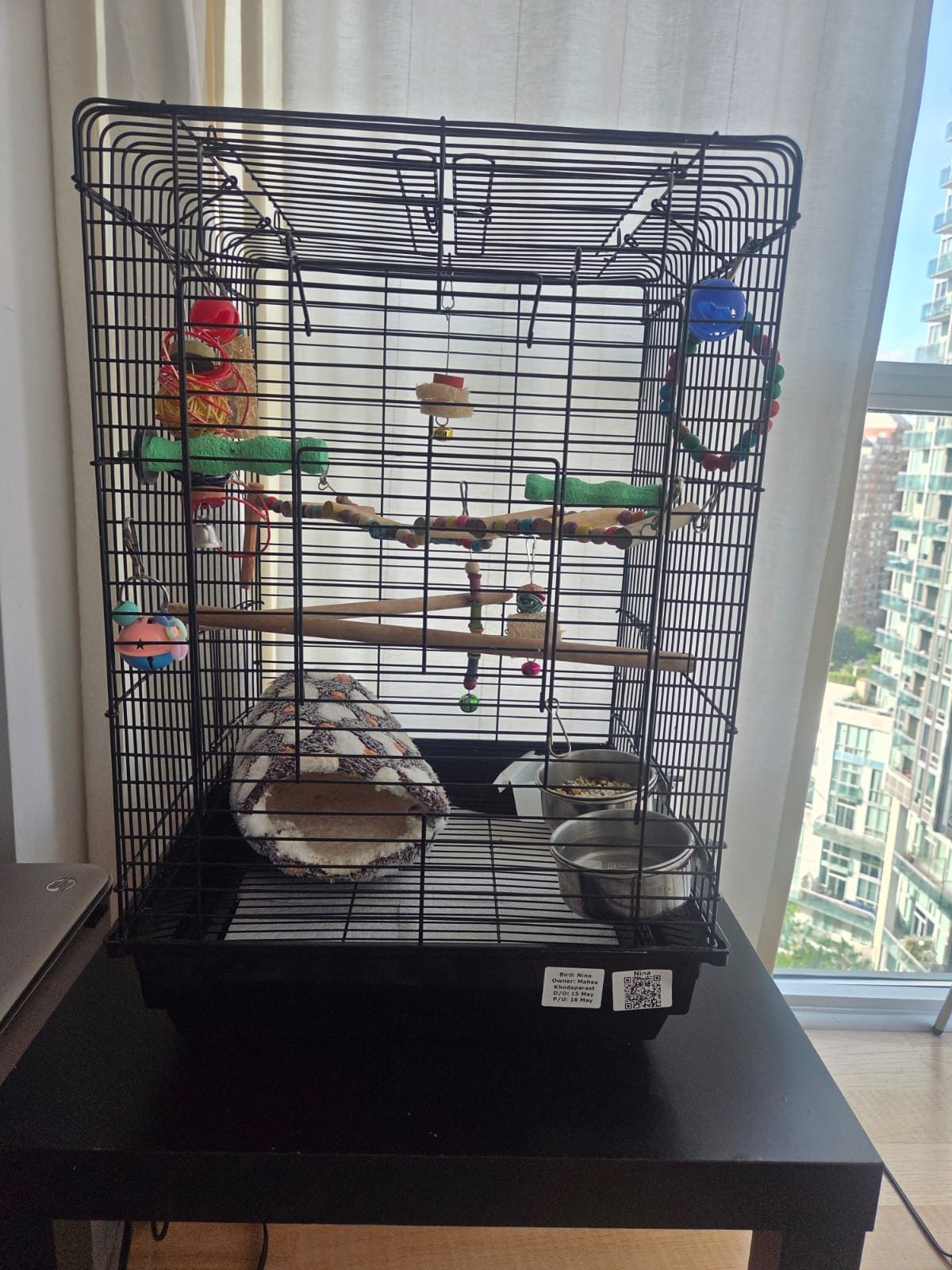
Nina, a Green-Cheek Conure, enjoys her spacious home.
Furnishing Your Bird's Abode: More Than Just Perches
Once you have the perfect cage, it's time to furnish it thoughtfully. This isn't just about decoration; it's about providing enrichment and comfort.
* Perches: Offer a variety of natural branches of different diameters (e.g., java wood, manzanita) to exercise their feet and prevent pressure sores. Avoid dowel perches as the only option. Place perches at different heights, ensuring there's space for your bird to maneuver. Consider a natural calcium perch or a pedicure perch, but use sparingly.
* Food and Water Bowls: Stainless steel or ceramic bowls are best as they are easy to clean and sanitize. Place them where they won't be easily fouled by droppings. Consider multiple food bowls for different types of food (pellets, freshchop, sprouts).
* Toys: Provide a rotating selection of stimulating toys for chewing, foraging, and mental engagement. Rotate toys regularly to keep things interesting. Make sure all toys are bird-safe and appropriate for your bird's size and chewing strength. Consider integrating foraging toys to encourage natural behaviours. For more ideas on species-specific needs, check out our [species guides](/species).
* Cover: A safe, breathable cage cover for night-time can help establish a routine and provide a sense of security, promoting better sleep for your bird.
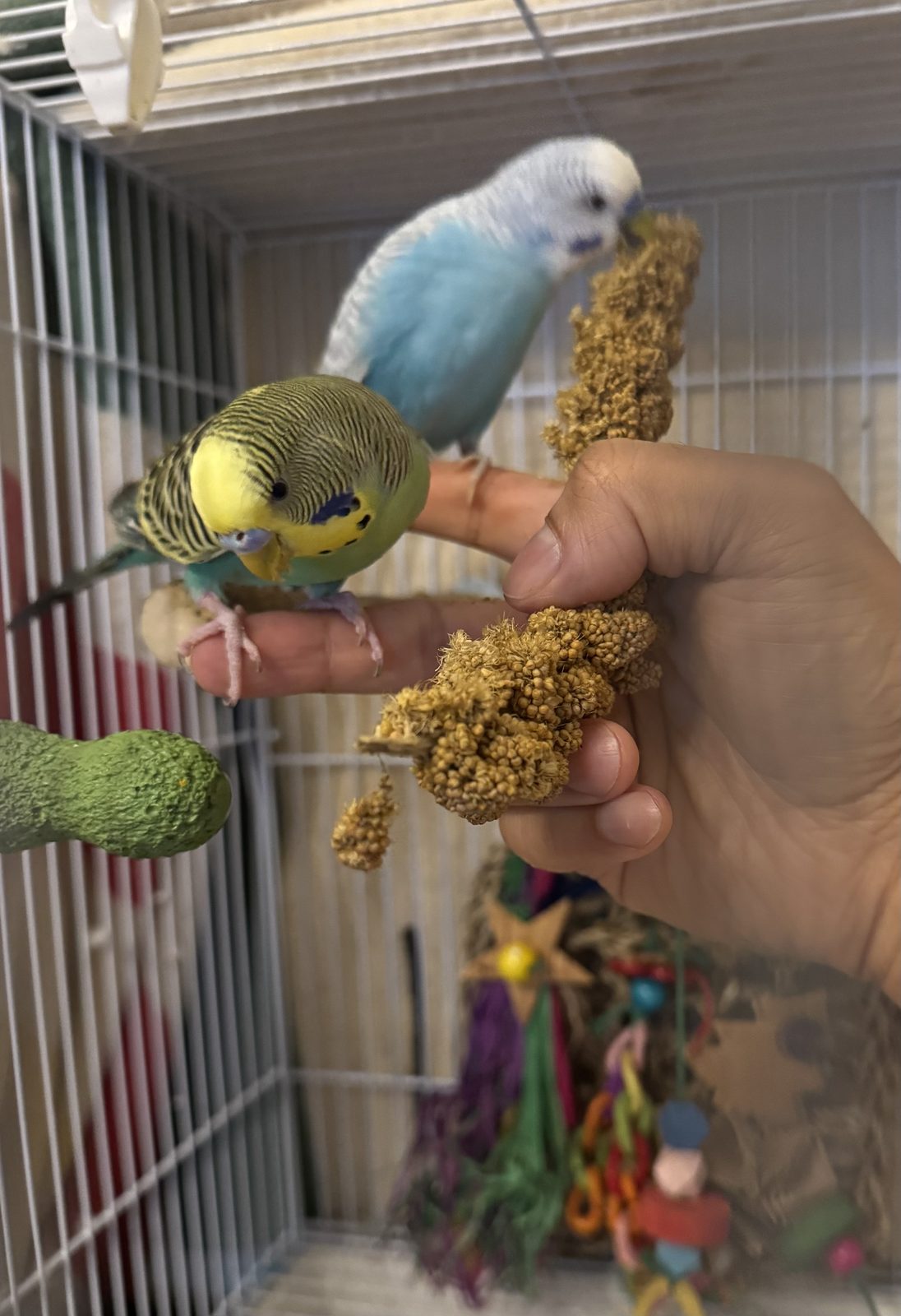
Urkel and Rio, a bonded budgie pair, with plenty of room to play.
Cleaning and Maintenance: A Healthy Environment
A clean cage is a healthy cage. Daily spot cleaning (removing droppings, refreshing food and water) is essential. A thorough weekly cleaning, where all perches, toys, and the cage itself are washed with bird-safe disinfectant and rinsed well, will prevent bacterial growth and keep your bird healthy. For Toronto residents, many pet stores carry avian-specific cleaning products.
Choosing the right cage is one of the most important first steps in providing a loving and enriched life for your companion bird. By investing time and thought into this decision, you're setting the stage for years of joyful companionship.
Ready to find your feathered friend? Visit Bird Sitting Toronto's Rehoming Portal to learn more about responsible bird ownership and discover birds waiting for their forever homes. [Start your adoption journey today!](/)
Ready to welcome a feathered friend?
Browse birds currently available for adoption through BST.
Browse Available BirdsRelated Articles
Bird Emergency Evacuation Plan: How Toronto Owners Can Prepare
Prepare a bird emergency evacuation plan for Toronto: make a carrier routine, gather supplies, and know what to do during a fire or power outage.
Oct 7, 2026
How Much Does It Cost to Own a Pet Bird in Toronto? A Realistic Budget Guide
Plan for the real cost of owning a pet bird in Toronto, from adoption and setup to food, supplies, and avian veterinary care.
Oct 4, 2026