Choosing the Right Perches for Your Bird: A Guide for Toronto Bird Owners
When you're preparing your home for a new feathered friend, or looking to upgrade your current setup, one of the most overlooked yet vital aspects is the humble perch. For a bird, perches are not just decoration; they are essential for foot health, exercise, mental stimulation, and even sleep quality. As Toronto bird owners, we want the best for our companions, and a good selection of perches can make all the difference.
Birds spend nearly their entire lives on their feet, gripping perches. Just imagine if you had to wear the same shoes, on the same type of floor, 24/7! Improper perching can lead to serious health issues like bumblefoot (pododermatitis), arthritis, and joint pain. Providing a variety of sizes, textures, and materials mimics their natural environment and ensures their feet get the varied exercise and stimulation they need.
Why Perch Variety is Key
Think of your bird's feet like your hands. If you only ever grasped one size and texture of object, your hand muscles would become weak and stiff. Birds need to exercise different muscles and pressure points on their feet to maintain health and prevent discomfort. A diverse array of perches encourages natural foot movement, strengthens muscles, and helps keep nails naturally trimmed to some extent.
Types of Perches and Their Benefits
There's a world beyond the smooth, dowel perches that often come with cages. Let's explore some excellent options:
Natural Branch Perches
These are arguably the best type of perch you can offer. Sourced from non-toxic trees (like fruitwoods, willow, maple, birch – always confirm safety), natural branches offer irregular shapes, varying diameters, and textures that mimic a bird's wild habitat. This keeps their feet active and stimulates blood flow. When collecting branches in the GTA, ensure they haven't been exposed to pesticides or car exhaust. Thoroughly scrub and bake them (low heat, around 200°F/90°C for an hour) to sterilize.
Rope Perches
Rope perches, made from cotton or sisal, offer a soft, flexible surface that's gentle on feet. They can be bent and shaped into spirals or swings, adding an element of fun and exercise. However, monitor them for fraying, as loose threads can become a hazard if ingested or tangled around toes. Replace them as soon as you see significant wear.
Manzanita and Java Wood Perches
These hard, durable wood perches are popular for their unique, often knotty shapes and varying diameters. They are resistant to chewing and offer excellent foot exercise. Manzanita and Java wood are naturally non-toxic and widely available at pet stores catering to avian needs.
Cement or Pumice Perches
These abrasive perches are designed to help keep nails and beaks trimmed. Crucially, they should only be used as one of several perches, and not as a primary resting perch. Placing one strategically, perhaps near a food or water dish where your bird spends less time, allows them to rub their beak and feet on it without constant pressure. Overuse can lead to sore feet.
Platform Perches
Especially beneficial for birds with foot issues or those needing extra stability, platform perches offer a flat surface to rest on. These can be made of wood or a safe plastic, providing a welcome break from gripping for tired or arthritic feet.
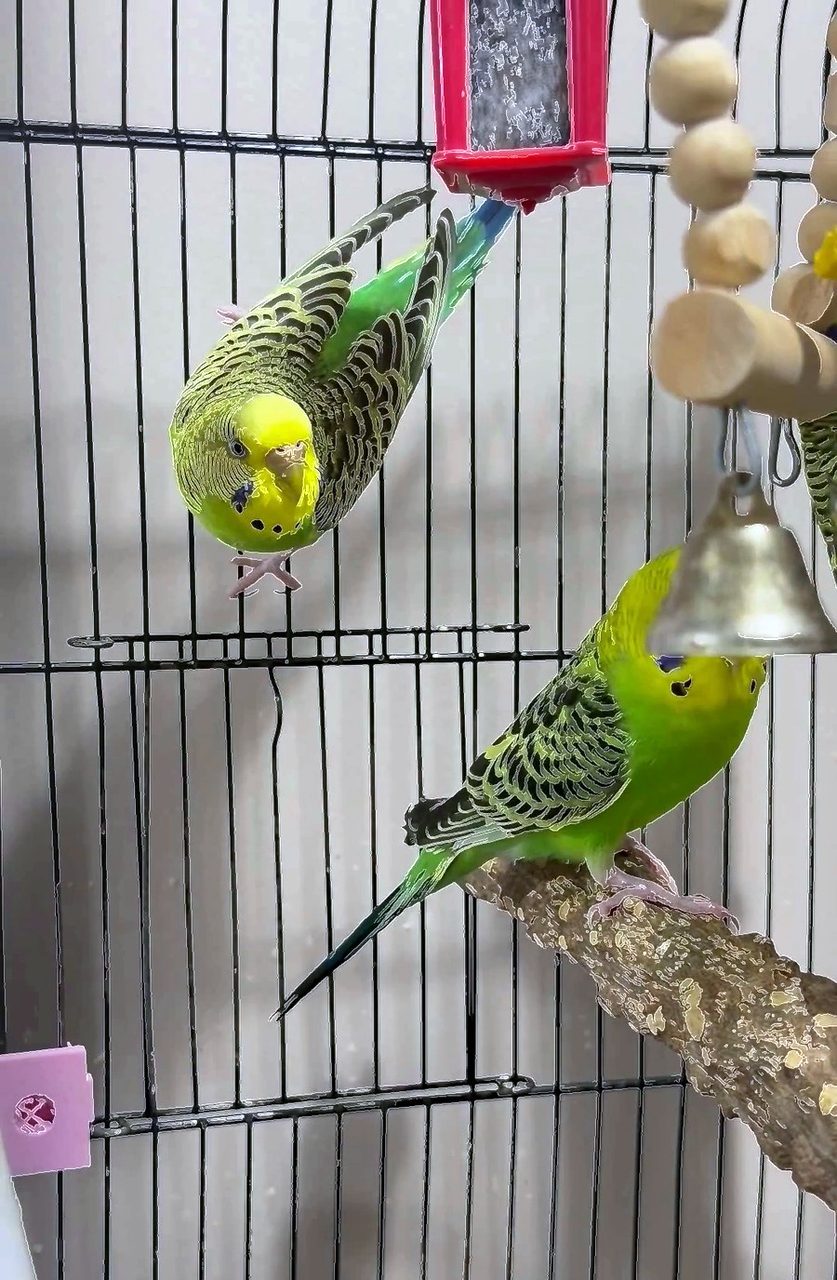
A diverse selection of perches allows these budgies to choose their preferred resting spots.
Perch Placement and Diameter
Varying Diameters: The ideal perch diameter allows your bird's toes to wrap around approximately two-thirds of the perch. A range of sizes, from thin to thick, will work different foot muscles. For a budgie, this might mean 0.5-1 inch; for a larger parrot like an African Grey, 1.5-2.5 inches.
Strategic Placement: Place perches at different heights and angles within the cage. Ensure there's a comfortable 'sleeping perch' – often the highest, most secure perch – and others near food and water dishes. Avoid placing perches directly over food or water, as droppings can contaminate them. Also, make sure there's enough space between perches for your bird to move around comfortably without their tail hitting the cage bars or other perches.
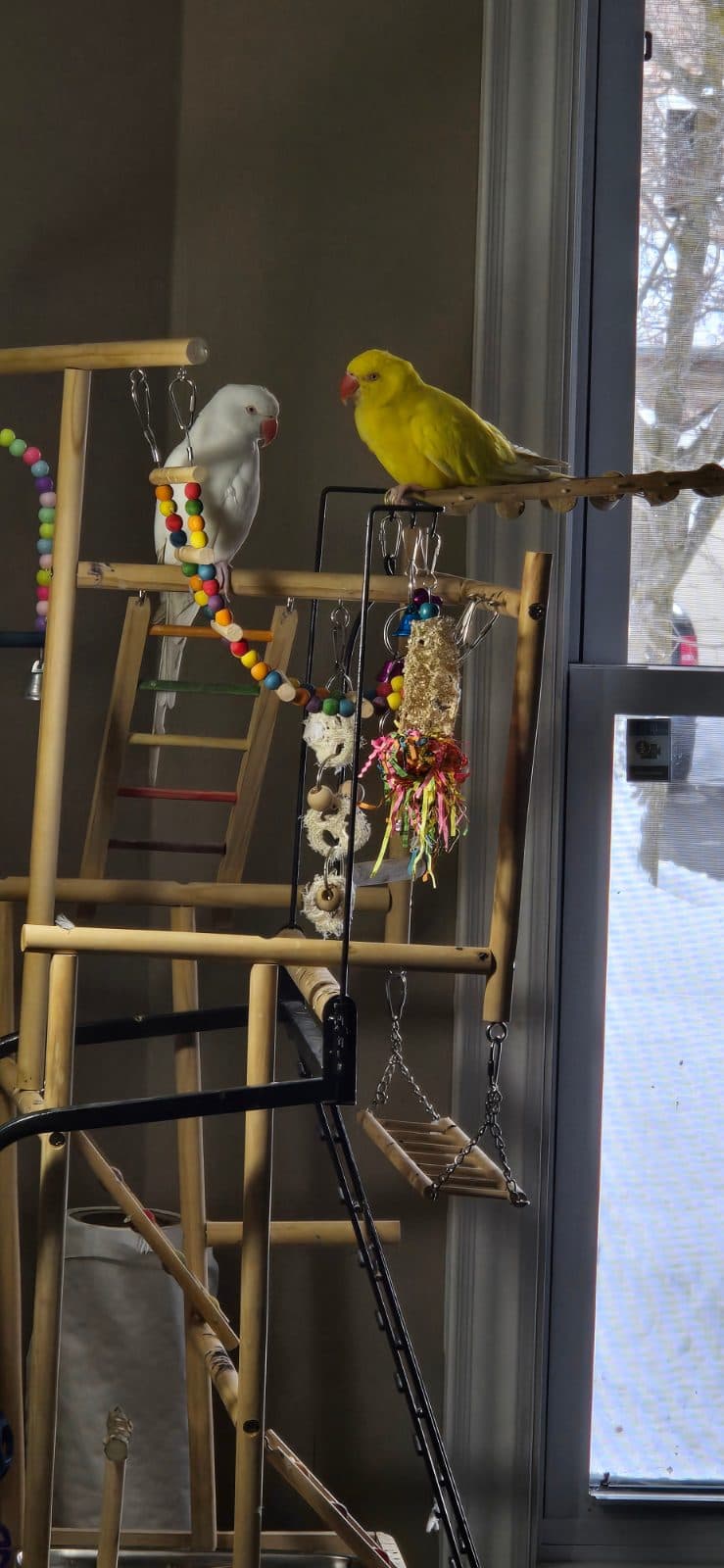
Outside the Cage: Don't forget the importance of perches in your bird's out-of-cage play area! Playstands, climbing trees, and tabletop perches provide opportunities for exercise and interaction in a safe environment. Many Toronto pet stores carry a good selection of these.
Cleaning Your Perches
Regular cleaning is paramount. Perches can harbour bacteria, fungi, and parasites from droppings and food debris. Natural branches can be scrubbed with a bird-safe disinfectant (or a dilute vinegar solution), rinsed thoroughly, and allowed to dry completely. Rope perches can often be machine washed (without detergent or with a bird-safe one) or hand-scrubbed and air-dried. Cement perches can be scrubbed with a stiff brush and water.
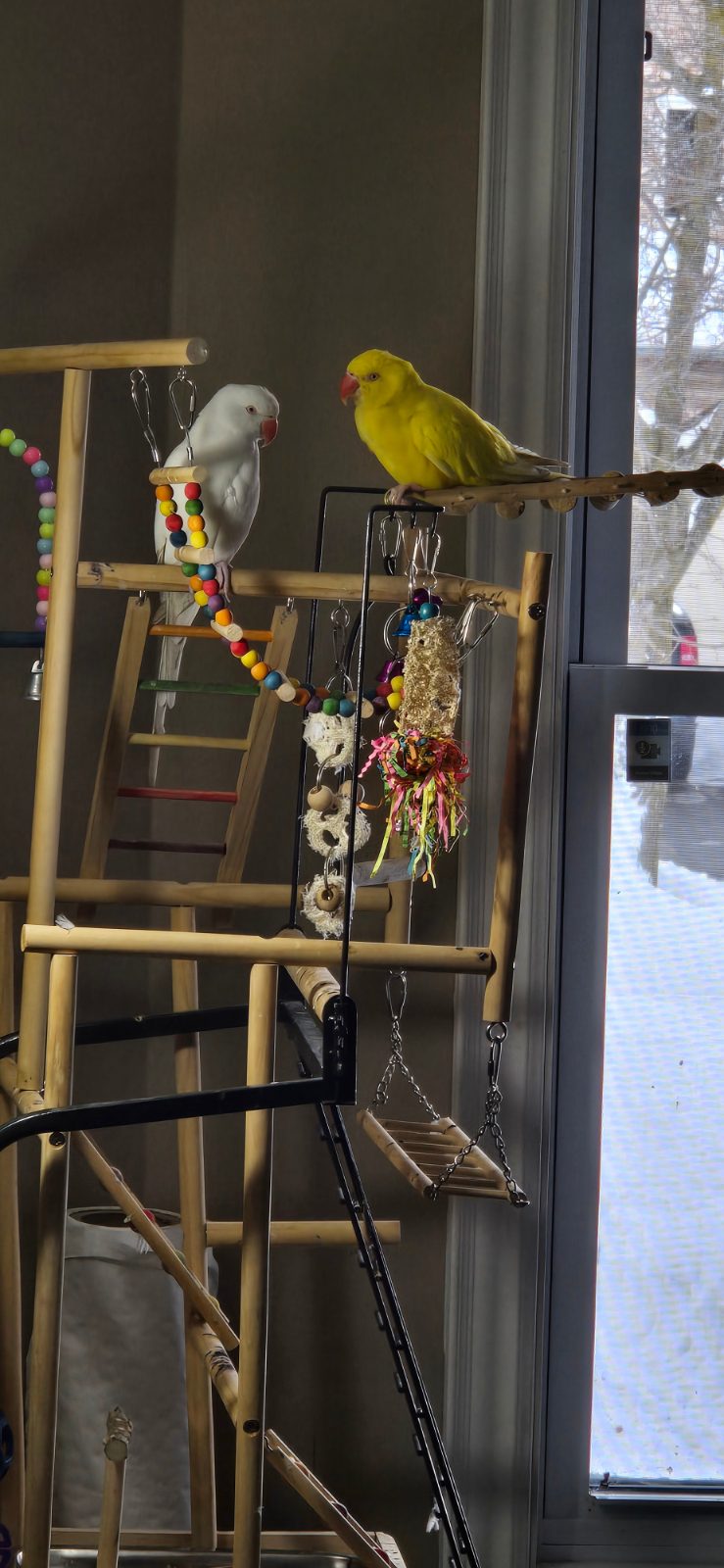
Observe your bird to see which perches they prefer for different activities.
What to Avoid
* All Dowel Perches: While one or two may be acceptable, relying solely on smooth, uniform dowels is detrimental to foot health.
* Sandpaper Perches: These are far too abrasive and can cause open sores and bumblefoot. Use only approved cement/pumice perches sparingly, and never sandpaper-covered ones.
* Toxic Woods: Always research any wood before introducing it to your bird's cage. When in doubt, don't use it.
By taking the time to select and arrange a variety of appropriate perches, you're investing directly in your bird's long-term health and happiness. A bird with healthy feet is a happy bird, ready to climb, play, and explore! If you're looking to welcome a new feathered companion into your Toronto home, remember to browse our adoptable birds for companions who deserve the best perching options. You can also learn more about specific breeds in our species guides.
Considering rehoming your bird? Learn how our portal can help find them a loving new home with excellent perches at /rehome.
Ready to welcome a feathered friend?
Browse birds currently available for adoption through BST.
Browse Available BirdsRelated Articles
Understanding Your Bird's Poop: A Toronto Bird Owner's Guide to Avian Health
Learn what your bird's droppings can tell you about their health. This Toronto guide helps new owners identify normal vs. abnormal avian poop.
Sep 5, 2026
Understanding and Managing Hormonal Behaviour in Companion Birds
Learn to identify and manage hormonal behaviours in your companion bird for a happier, healthier life together.
Sep 3, 2026